Wolf cooking equipment · Los Angeles
Wolf ranges, ovens, cooktops and hoods, read properly the first time
Independent Wolf service across Brentwood, Pacific Palisades, Bel-Air and Hancock Park. A burner that clicks without lighting, an oven fifty degrees adrift, a hood that hums and pulls nothing — each of those is a different fault with a different part, and they get told apart on site rather than over the phone.
- Service call
- $89 flat, credited
- Phone
- answered 24/7
- Visits
- 8:00 am – 8:00 pm, seven days
Where we work
Four neighbourhoods, four different sets of trouble
Kitchens on this side of Los Angeles fail in patterns. Marine air off the bluffs, dust pulled up the canyons, wind on the hood dampers, and gas runs laid down a century ago.
-
Brentwood 90049 Canyon-side houses and San Vicente condos, heavy on 48-inch dual-fuel ranges under wide island hoods.
Repairs in Brentwood -
Pacific Palisades 90272 Bluff-top and canyon kitchens where marine air reaches the burner boxes and hood hardware first.
Repairs in Pacific Palisades -
Bel-Air 90077 Large remodelled kitchens with paired wall ovens, wide rangetops and blowers mounted up in the attic.
Repairs in Bel-Air -
Hancock Park 90004 1920s houses with period kitchens, where old gas runs and tight hood ducting cause most of the trouble.
Repairs in Hancock Park
How a call runs
Diagnosis first, and the number before the work
-
You describe the fault
On the phone we ask what the appliance does rather than what it should do — which burner, at which setting, from cold or once hot, with what noise. Two minutes of that decides which parts travel to the address.
-
It is read, not guessed
On site the unit is metered and observed running: probe on the rack for a full cycle, spark checked at the electrode, current drawn at the blower. Findings and the price for the repair are put to you before a single part is opened.
-
Fixed, then proved fixed
The repair is finished and then demonstrated with the appliance working: a simmer that stays low, a cavity that holds temperature, a hood that clears smoke off the cooktop. Panels go back on, cabinetry unmarked.
Something is wrong tonight
Gas you can smell, a burner that lights with a bang, a scorched switch
Those three do not wait. Shut the appliance off at the wall or the gas cock and call — the line is answered 24/7, and a technician can talk you through making it safe before anyone arrives.
Visits 8:00 am – 8:00 pm, seven days
Asked on the phone
Six questions, answered the way we would answer them
A burner clicks and clicks but never lights. Is that a whole new cooktop?
Almost never. Repeated sparking with no flame is nearly always the igniter or the path the gas takes to it: a cracked electrode, a burner port blocked with canyon dust or boil-over, a burner cap sitting a millimetre off its seat, or a spark module firing on the wrong channel. Those are small parts and an hour of careful work, not a replacement appliance.
My oven dial reads 350 and a thermometer on the rack reads 300. What is wrong?
A fifty-degree gap usually means the temperature sensor has drifted out of tolerance, and occasionally that a bake element or gas valve is only working part of the time. We put a calibrated probe on the rack and watch a full cycle, because a drifting sensor and a weak element look identical from the front panel and lead to two different repairs.
How much is the visit?
The service call is $89, flat, and it covers the trip and the full diagnosis. It is credited in full against an approved repair. Nothing gets ordered or replaced until the number for the repair itself has been agreed with you.
Do you work on the blower if it is up in the attic?
Yes. Plenty of Bel-Air and Brentwood kitchens run an inline or remote blower mounted above the ceiling, and that is where the capacitor, the wheel and the wiring live. We work on the liner at the cooktop and the blower at the far end of the duct, plus the damper and the make-up air interlock that shuts a big hood down mid-cook.
Marine air keeps eating the hardware in our Palisades kitchen. Can that be helped?
Partly. Salt air corrodes igniters, spark leads and hood fixings faster near the bluffs, and no repair stops the weather. What does help is sealing the burner boxes properly on reassembly, replacing corroded leads rather than cleaning them, and having the ventilation actually pulling, so damp cooking air leaves the room instead of settling on the metal.
When is a fault worth calling about rather than living with?
Call straight away for gas you can smell, a burner that lights with a bang, scorch marks around a switch or a control panel that behaves at random — those get worse and they involve fuel or wiring. A slow oven, a noisy hood or one dead cooktop zone is annoying rather than urgent, and it can wait for a slot that suits you.
What we repair
Four kinds of call, and what they usually sound like
These are the sentences people actually open with. If yours is on this list, the fault behind it is already familiar.
-
Range Repair
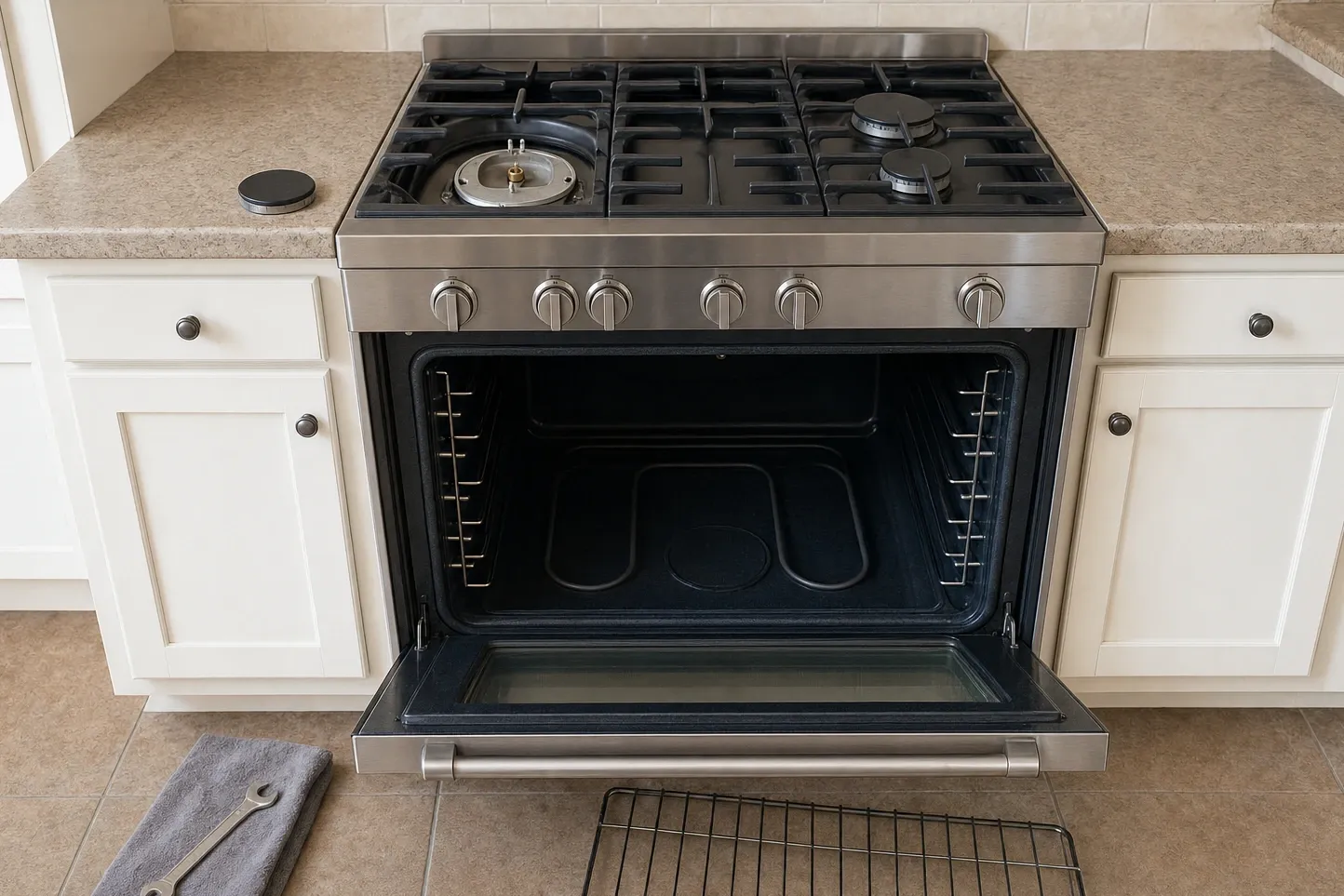
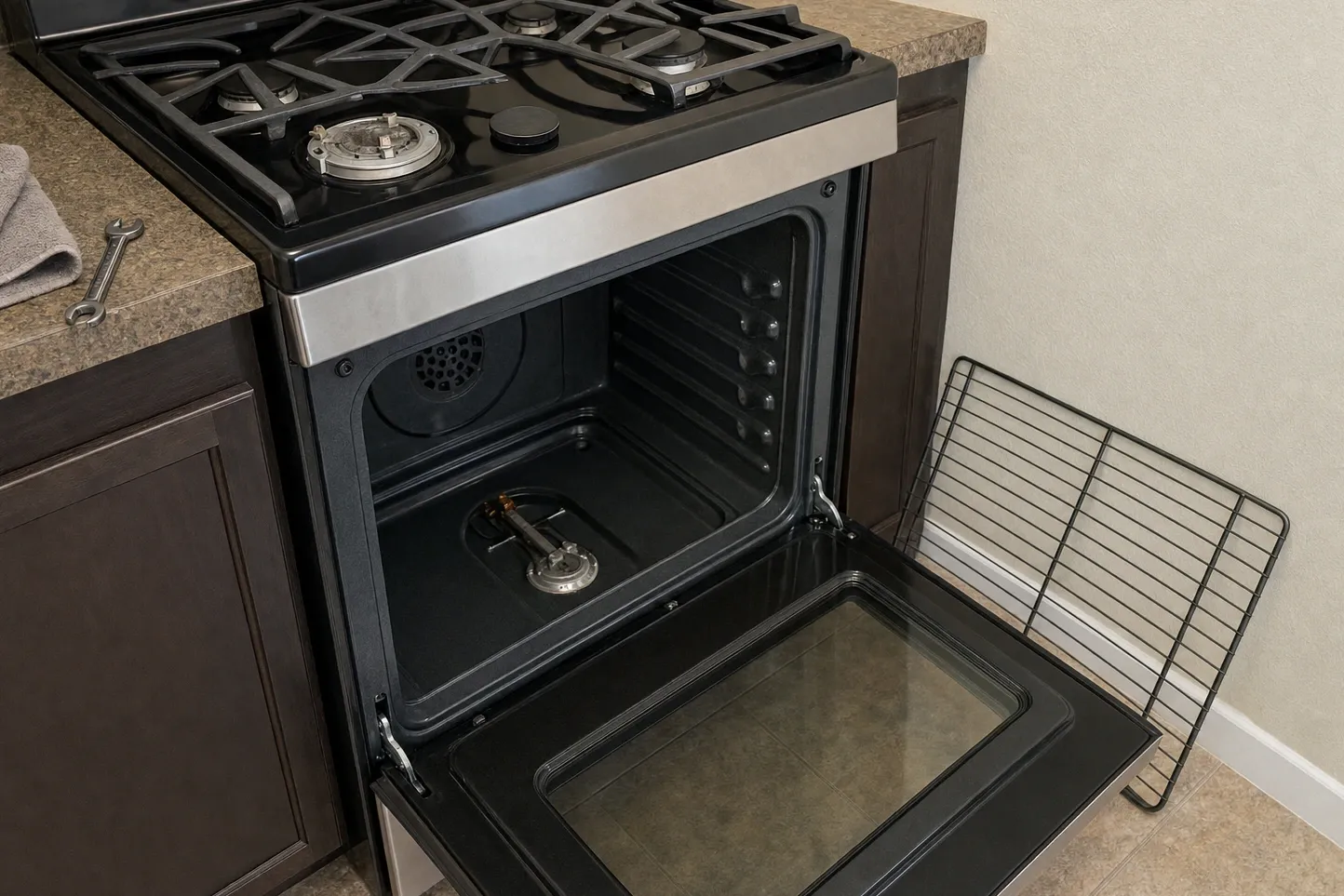
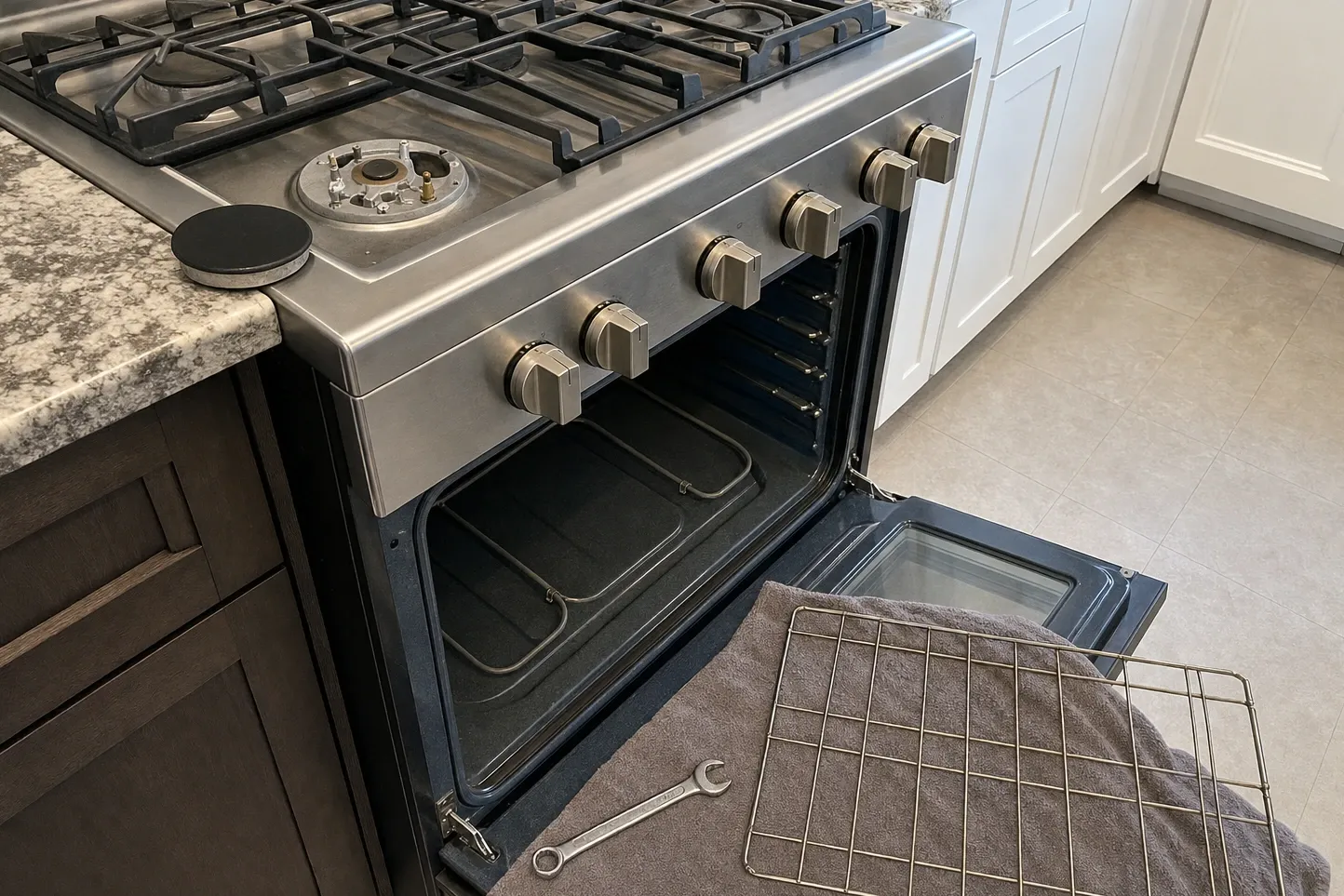
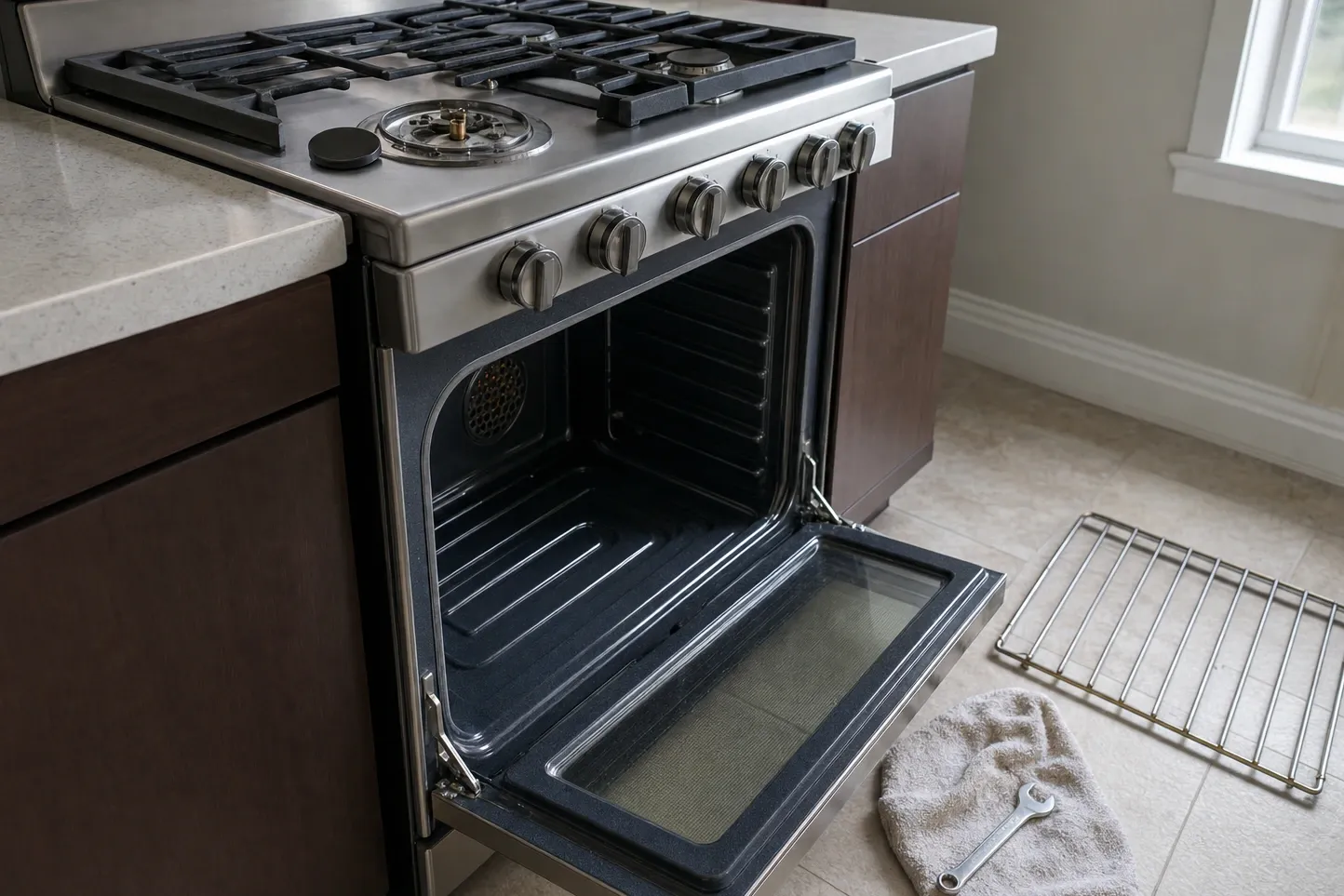
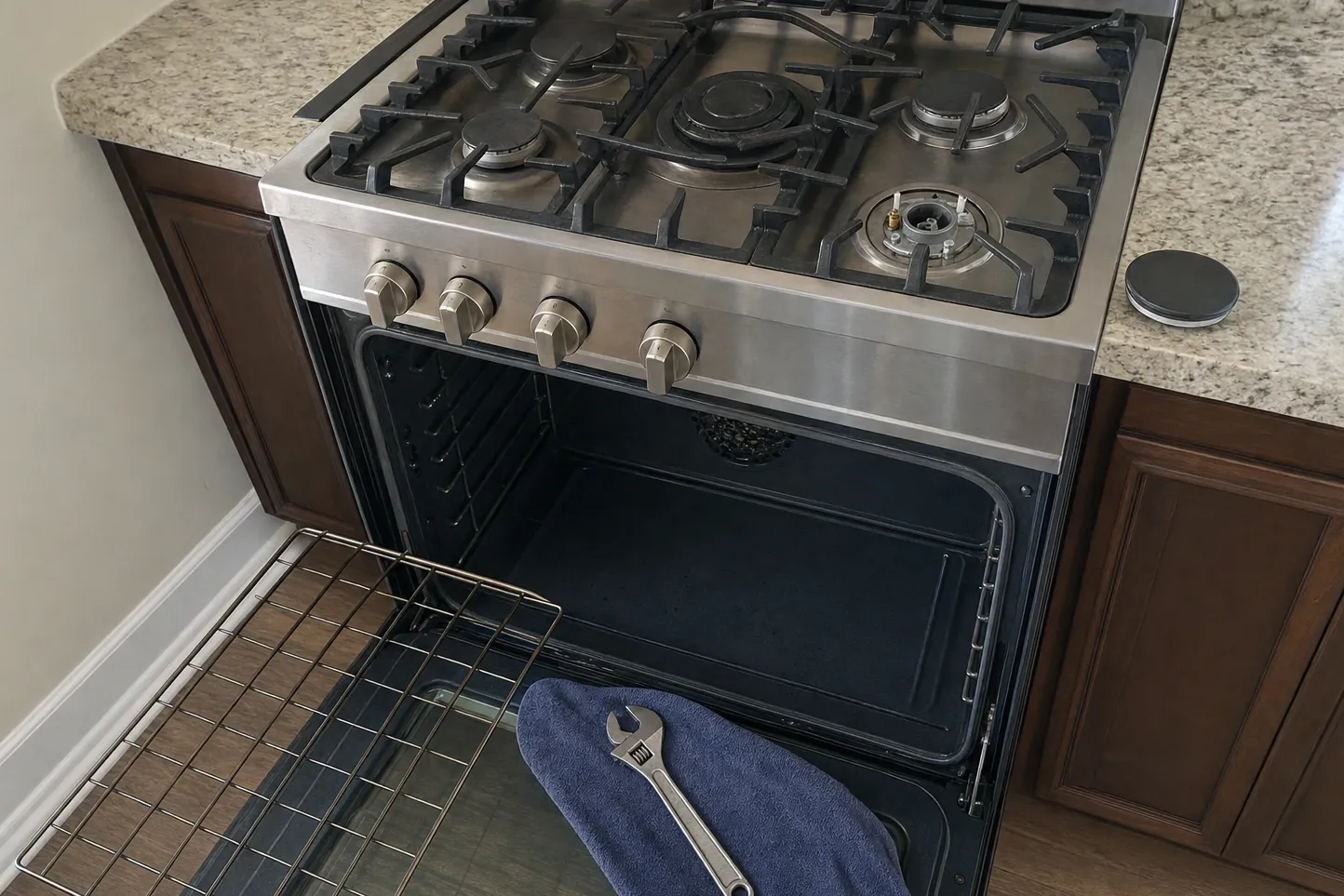
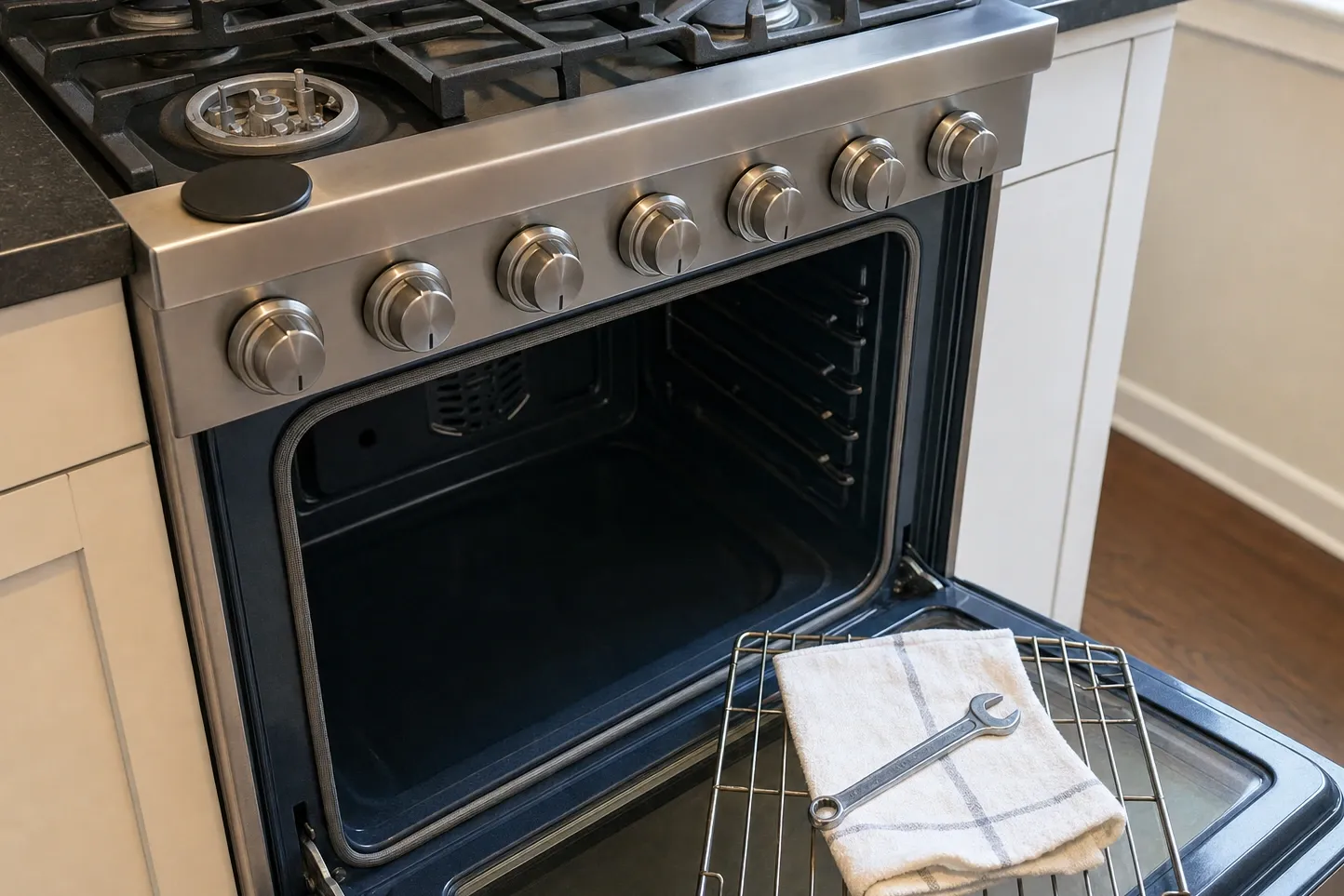
Wolf dual-fuel and all-gas ranges: ignition, burner tuning, oven cavity heat and the boards behind them, diagnosed in one visit.
- Burner sparks over and over but the flame never catches
- Oven went dead after a summer outage while the cooktop still works
- The low setting has no low — a sauce either sits cold or scorches
- Oven lights with a thump you can hear in the next room
-
Oven Repair
Built-in Wolf wall ovens and steam ovens — temperature drift, convection faults, latches and lock-outs after a clean cycle.
- The dial reads 350 and a thermometer on the rack reads 300
- Self-clean finished hours ago and the door still will not unlock
- Convection fan screeches, then stops partway through a roast
- Steam oven keeps asking for water with a full tank
-
Cooktop Repair
Wolf gas cooktops, rangetops and induction tops: sealed burners, spark modules, coils, touch controls and the wiring under the glass.
- Induction zone drops out a few minutes into cooking
- Flame lifts off the burner cap and blows itself out
- One element runs flat out wherever the knob sits
- Cooktop trips the breaker when two zones run together
-
Range Hood Repair
Wolf hoods, liners and inline blowers — motors, capacitors, dampers, make-up air interlocks, lighting and the duct run itself.
- Blower hums on every speed but pulls almost nothing
- Hood shuts itself off after a few minutes on high
- Damper bangs all evening whenever the wind comes up the canyon
- Half the lights are dead and the rest buzz
Reviews
What Los Angeles kitchens say afterwards
One fault, what it turned out to be, what happened next.
4.9/ 51,363 reviews
Ran the clean cycle before guests arrived and the oven died with the door still locked. A blown thermal fuse, plus a latch motor that had given up. He released the door and fitted both parts that afternoon.
Cyril B.
Pancakes browned on one side of the griddle and stayed raw on the other. The thermostat probe under the plate had drifted badly. He swapped it, then ran a butter test across the surface to prove it was even.
Darius M.
Big hood kept shutting down after ten minutes on high. The make-up air damper never opened, so the interlock cut it. He wired and adjusted the damper and it runs full tilt now. Left a fair bit of dust behind.
Lupita A.
Two ways in, and nothing to fill out
Tell us what it is doing and we will tell you what it is
Have the model number to hand if you can — on a Wolf range it is on the plate behind the kick panel or inside the oven door frame. It decides which parts travel with the technician.
$89 service call, flat, credited against an approved repair · line answered 24/7
-
Cooking equipment only
Ranges, rangetops, cooktops, wall and steam ovens, and ventilation. Refrigeration is somebody else’s trade.
-
$89 service call
Flat, covers the visit and the full diagnosis, and credited against an approved repair.
-
Common parts on board
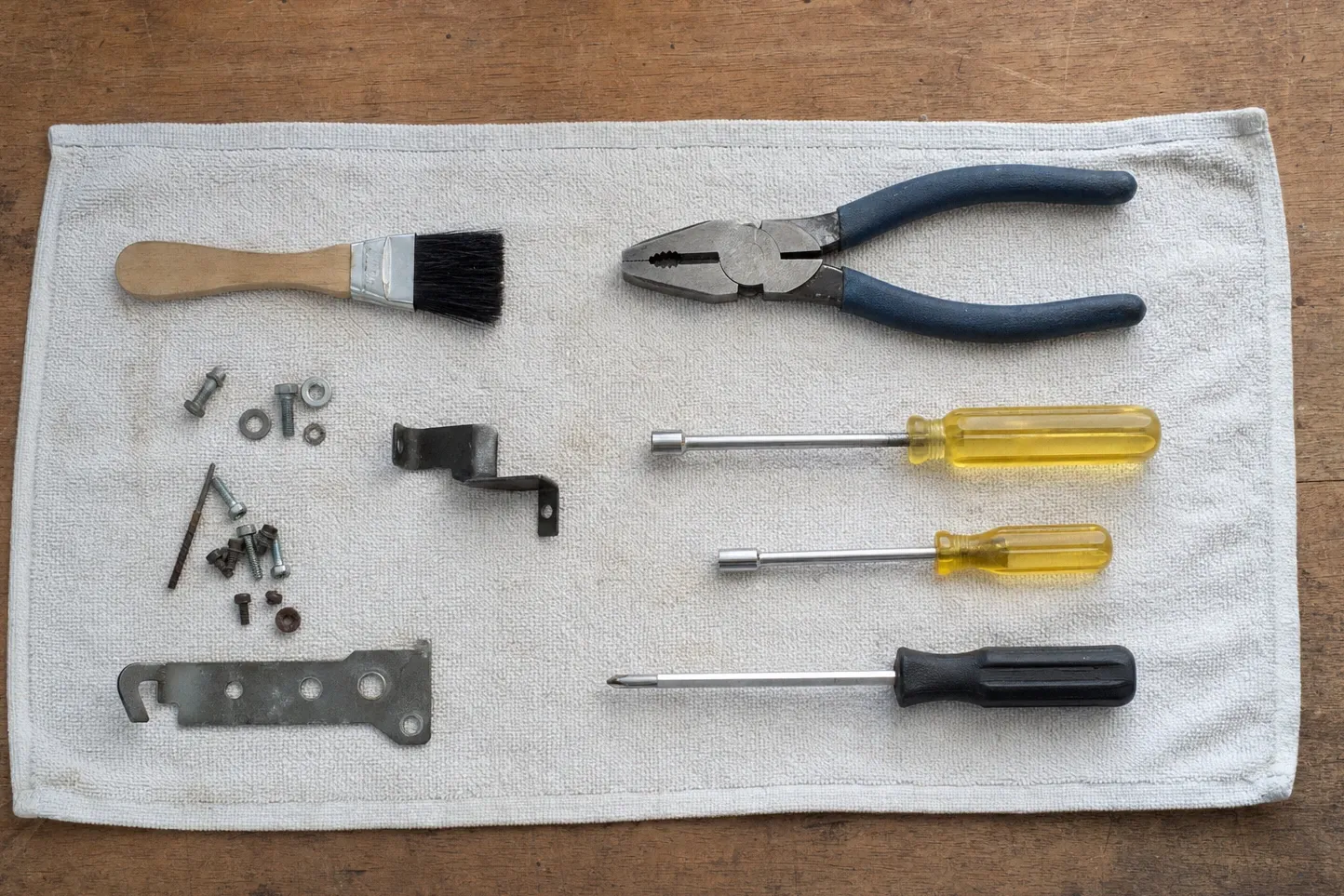
Igniters, spark modules, sensors, switches, capacitors and dampers ride on the van.
-
Answered around the clock
The line takes calls 24/7; visits run 8:00 am to 8:00 pm, seven days.