The hills and the Westside estates · 90077
Wolf Repair in Bel-Air
Blowers in the attic, paired wall ovens, and interlocks that cut a big hood dead
If the hood dies partway through cooking rather than refusing to start, look at the make-up air interlock before the blower. If one wall oven of a pair drifts while the other holds, that is a sensor, not a board.
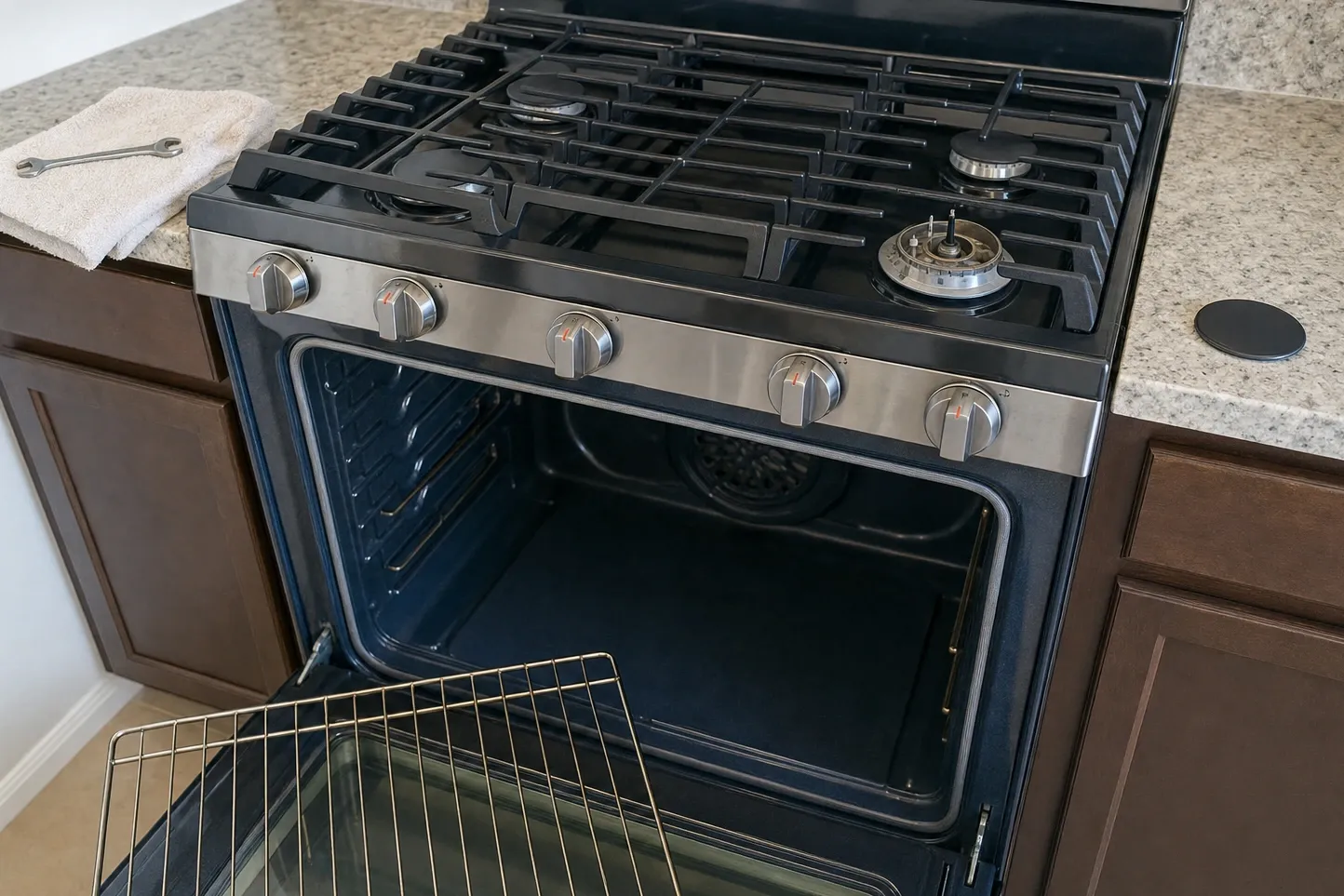
What comes up in Bel-Air
- Attic and inline blowers, where the capacitor, the wheel and the wiring all live above the ceiling
- Paired wall ovens where one cavity drifts and the other holds temperature perfectly
- Large hoods cut off mid-cook by a make-up air interlock that never opens
- Long duct runs with more elbows than airflow, so the kitchen never quite clears
A hood that stops rather than never starts
There is a useful distinction behind most of the ventilation calls up here, and it costs nothing to make before you ring. A hood that will not start at all is an electrical fault on the hood: a switch, a board, a lost supply. A hood that starts, runs happily for a few minutes and then goes quiet on its own is almost never the hood.
Big extraction has to be balanced by air coming back into the house, and where that is arranged by an interlock the hood is allowed to run only while the replacement air path is open. If the damper, the actuator or the sensing on that path has failed, the hood does exactly what it is designed to do: it stops. Nothing is broken in the blower, and replacing the blower changes nothing.
It matters here because the working parts are often not in the kitchen. A blower in the roof space puts the wheel, the capacitor and the wiring above the ceiling, so half an hour proving where the fault is saves a lot of opening up.
Two ovens on one wall are their own test rig
A pair of built-in ovens side by side is the easiest diagnostic in the house, and most owners have already done it without realising.
If one cavity bakes pale and slow while the other is faultless, the house supply is fine, the circuit is fine and the installation is fine, because both cavities share all three. What is left is inside the cavity that is misbehaving: the probe it reads itself by, or the heat it is actually producing. Those are two different repairs and they sit in two different bands, so it is worth separating them before anyone is called out.
To separate them, put a probe on the middle rack of each, set both to the same temperature, and note what they settle at and how far they swing. A steady gap points one way; a cavity that wanders points the other. Bring those numbers to the call.
The four repairs, and what they run to
| Repair | Published range |
|---|---|
| Range Repair | $170–$930 band by band |
| Oven Repair | $190–$930 band by band |
| Cooktop Repair | $170–$930 band by band |
| Range Hood Repair | $450–$930 Controls only; other hood work is quoted after the diagnosis band by band |
| The visit itself | $89 flat, credited |
Reviews
Left after visits around Bel-Air
One fault, what it turned out to be, what happened next.
5.0/ 51,234 reviews
Lower oven would preheat forever and give up short of temperature. The bake element had a blister and a hairline break at the elbow. Replaced from stock, and he checked the upper cavity while the tools were out.
Isabela F.
The fan would come on by itself at full speed while nothing was cooking. A heat sensor above the cooktop had failed closed in the summer heat. He replaced it, tested with a burner running, and it behaves.
Cordell H.
The knobs got so hot you could not turn them off barehanded. Insulation behind the fascia had slumped and one burner box sat crooked. He shimmed and re-packed it. The kit took two weeks to arrive.
Ottoline P.
Two ways in, and nothing to fill out
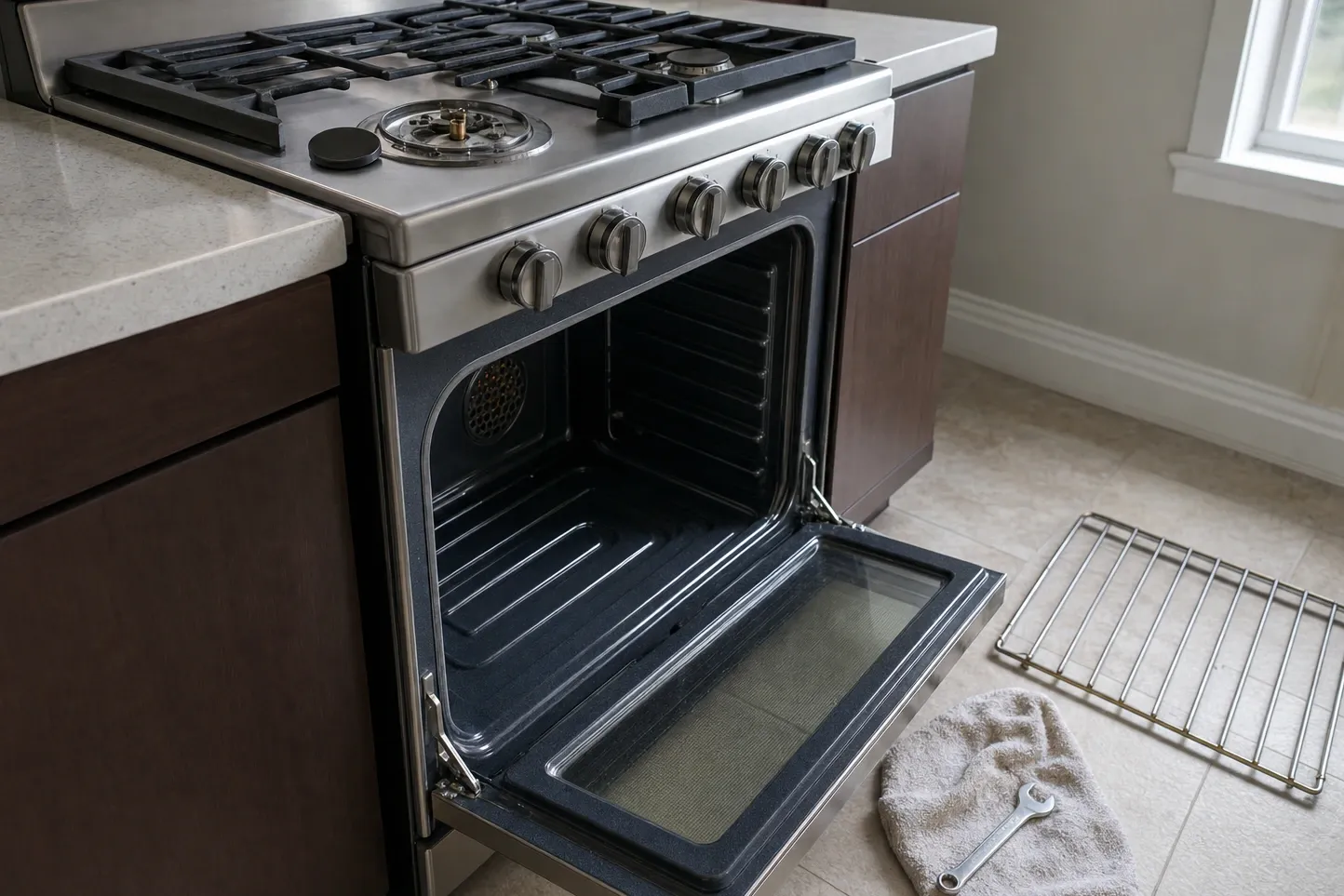
Say what the machine is doing, and the fault gets named
Have the model number to hand if you can, or just the letters at the front of it — DF, GR, SRT, CG, CI, SO, DO, PW. Those say what you own, and what you own decides which parts travel out with the technician.
$89 service call, flat, credited against an approved repair · line answered 24/7