A series in 5 parts
Before You Call
Five things worth settling before anyone drives out: what you own, what the noise means, whether the oven is really lying to you, what the vent over the cooktop is allowed to be, and how the number on the invoice is arrived at. If one of them ends the problem without a visit, that is the series working.
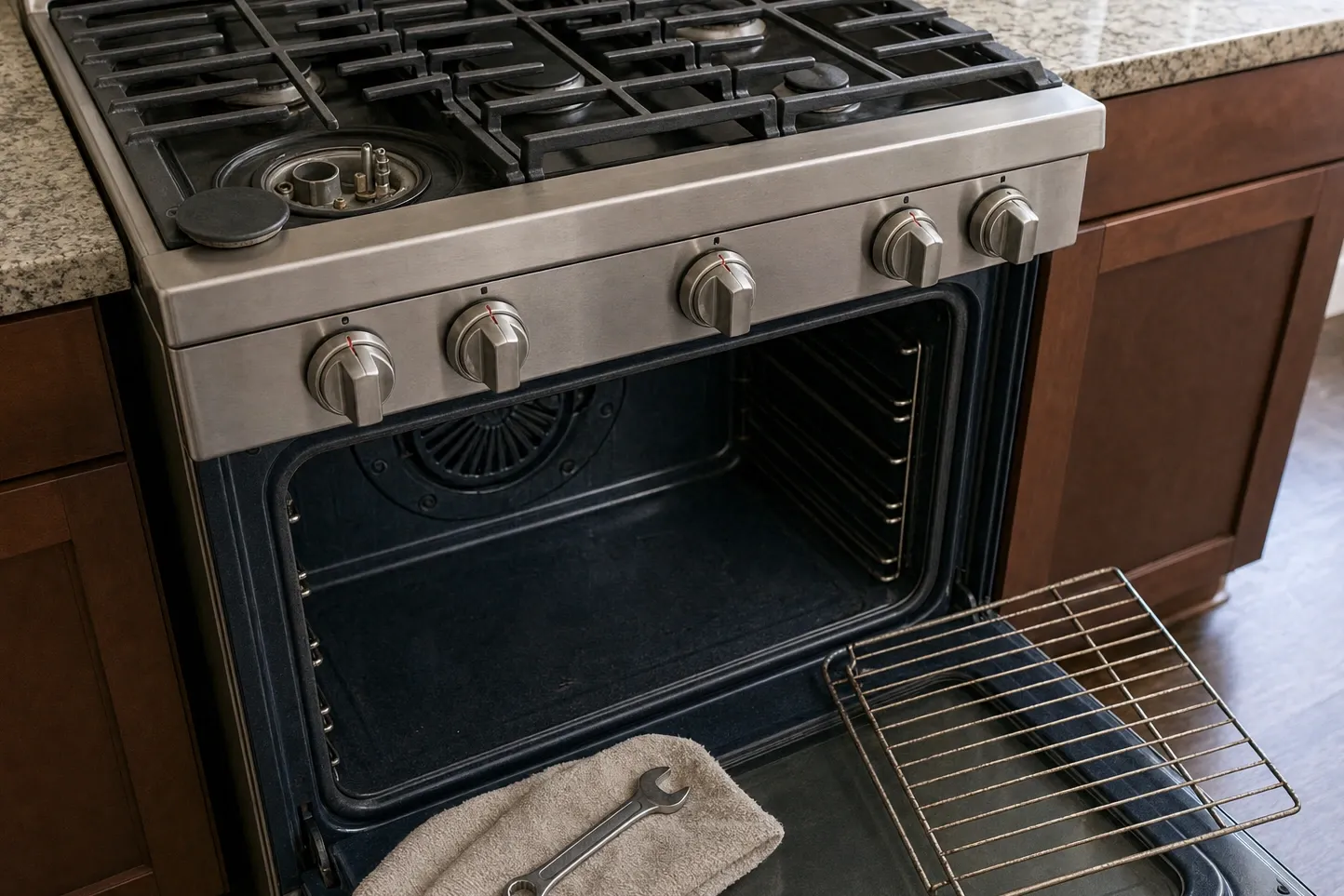
- 01 Which Wolf Do I Have? Reading the Model Number Written by Gustavo Peralta Eleven prefixes, and each one changes which repair you are reading about and which band it falls in.
- 02 Wolf burner clicks but will not light: what it means Written by Gustavo Peralta The clicking has already told you three things work. Which of four small parts is stopping the fourth.
- 03 Wolf oven reads 350 and bakes like 300: measuring drift Written by Gustavo Peralta Two complaints feel identical from the front panel and lead to two different repairs. Telling them apart takes one probe and one cycle.
- 04 What Your Hood Is Allowed to Vent Through in a Bel-Air or Palisades Fire Zone: Ember-Resistant Caps Written by Gustavo Peralta The last few inches of duct, outdoors, are where a hood in a fire-hazard zone usually stops pulling.
- 05 How a Wolf Repair Quote Is Built: Call Fee, Band, Approval Written by Gustavo Peralta Three numbers and one decision, set out in the order they actually happen on the day.
None of these five is a substitute for a meter on the appliance. When you are done reading, the price bands say what the repair is likely to come to and the atlas says what reaching your kitchen involves.
Two ways in, and nothing to fill out
Say what the machine is doing, and the fault gets named
Have the model number to hand if you can, or just the letters at the front of it — DF, GR, SRT, CG, CI, SO, DO, PW. Those say what you own, and what you own decides which parts travel out with the technician.
$89 service call, flat, credited against an approved repair · line answered 24/7